
Student Travel Grants
We offer up to 5 travel grants to cover registration, travel, and lodging costs for Annual TWS Western Section Conferences for Chapter members! These annual conferences offer fantastic educational and networking opportunities for students or those just starting out in their career.
If you are interested in applying, please submit the following qualifications to Lori Bono (lori.bono@wildlife.ca.gov) with the email subject line “Student Travel Grant”:
1. Be a current San Joaquin Valley Chapter member;
2. Submit proof you are a current student or have graduated within the last three years (e.g., school transcripts);
3. Submit a brief summary of yourself and include your academic institution, major, and how this conference would benefit your academic or professional goals;
4. Apply by announced deadline*; and
5. Keep all receipts for reimbursement (i.e., registration, lodging, and gas).
*Note: application deadlines are aligned with the timing of the annual conference schedule and vary annually.
Research Grants
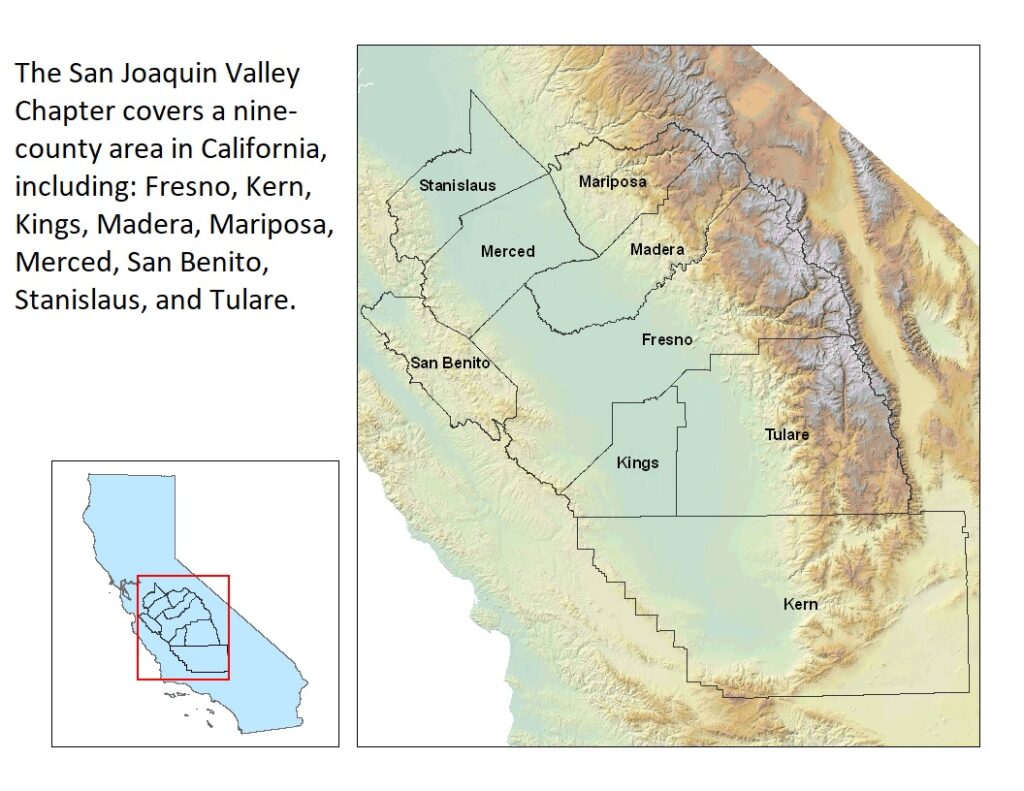
Grant funding is available to San Joaquin Valley Chapter members for small-scale research projects focused on species and habitats within our Chapter Area (Fresno, Kern, Kings, Madera, Mariposa, Merced, San Benito, Stanislaus, and Tulare Counties). This funding supports scientific research that enhances our understanding of Central Valley ecosystems, contributes to conservation efforts, and promotes sustainable management of regional biodiversity.
Funding Details
1) Funding Amount: Individual project grants range from $500 to $1,000.
2) Funding Cycle: Funding is distributed annually (by calendar year) and subject to availability. Awards are made on a rolling basis throughout the year.
3) Application Deadlines: Applications are accepted on an ongoing, rolling basis. Proposals will be reviewed in the order they are received, and awards will be made based on funding availability. We encourgage early submission to maximize funding opportunities.
Application Guidelines:
Applications will be judged on their merit and thoroughness. Complete proposals must include the following components:
1) Cover letter: This intended as a means of introduction to you. Include a brief description of your background, your professional or educational affiliation, and if you are a student include the name of your academic advisor. You may also include a short proposal summary.
2) Introduction/Objectives: Proposals must be consistent with the objectives of the Chapter as presented in the Bylaws. Proposals must demonstrate how the project will improve our understanding of native flora, fauna, wildlife habitats, or landscapes in the Chapter area, and present the scientific, managerial, or educational merits of the project. Describe the background and justification of the project and why this project is important: its time urgency and how it will positively impact the current situation. For projects that are in progress, include a summary of work done and any preliminary findings.
3) Methods: Describe the plan of proposed work, including the study design and a detailed description of methods and procedures. This section must also contain detailed descriptions of data analyses, techniques, and procedures. Include a description of accepted humane methods for any animal handling. Also include the details of any necessary scientific research permits.
4) Schedule: Show a clear, concise, realistic timeline, with specifics of how you will accomplish goals. Include such aspects as beginning and completion dates for project planning, study-site selection, data collection, and data analyses.
5) Deliverables: Describe or list any resulting products for the proposed research. The Chapter prefers that project results be made available to the scientific community through publication in a peer-reviewed journal or other suitable format. The Chapter requires that applicants whose projects are awarded grant funding provide a project description for inclusion into the Chapter newsletter, and present their research findings or progress at the annual Natural Communities Conference.
6) Budget: Submit the complete budgetary needs for the project, including any equipment and a description of all other sources of financial support received or applied for. Specify what portion of the project budget is proposed for funding by the Chapter and other sources.
Submission Instructions
Please submit grant applications to Lori Bono (lori.bono@wildlife.ca.gov) with the subject line “Research Grant Application.” Applications will be reviewed by our Grants Committee, and applications will receive an award decision within 45-days of application submission.