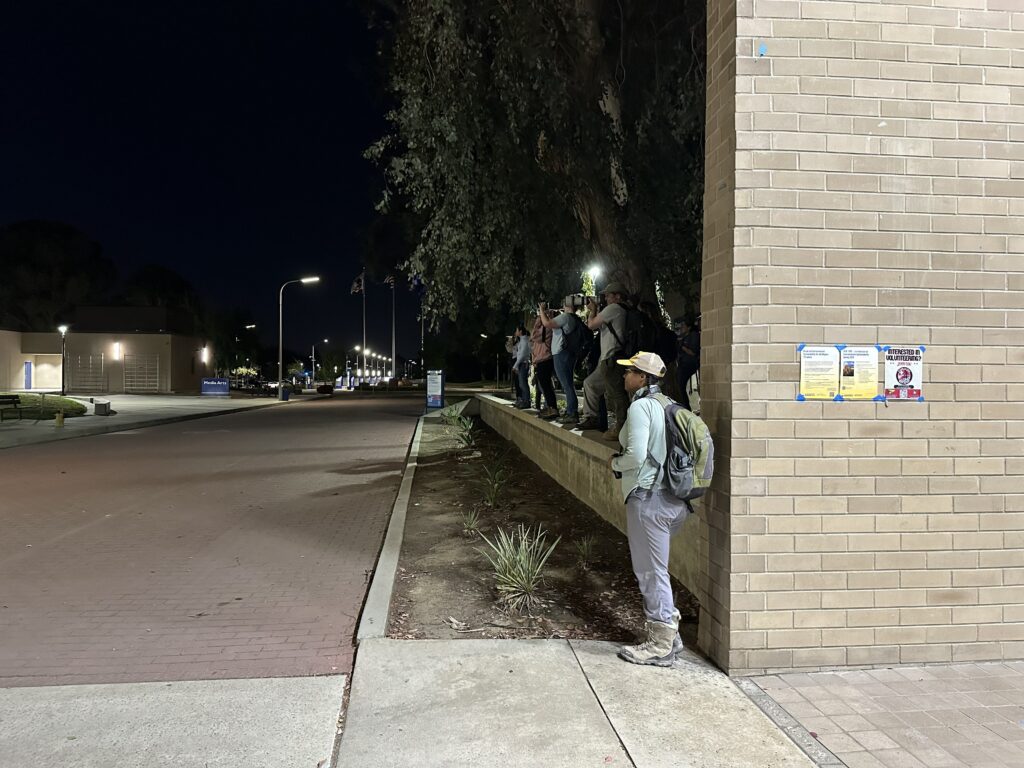
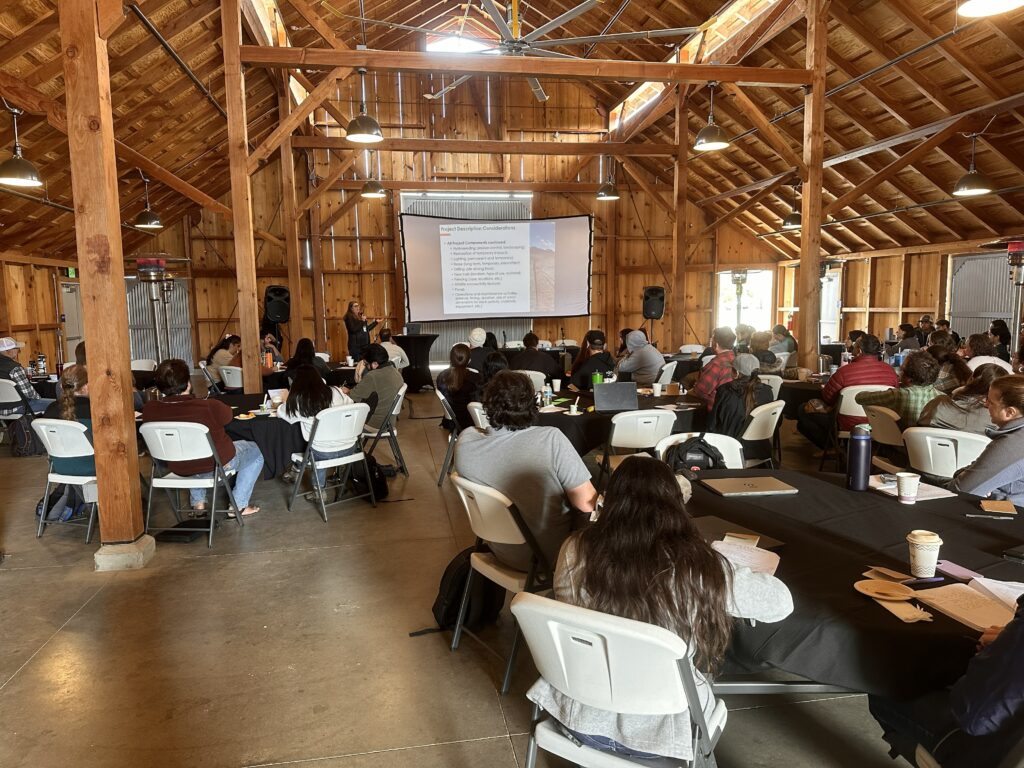
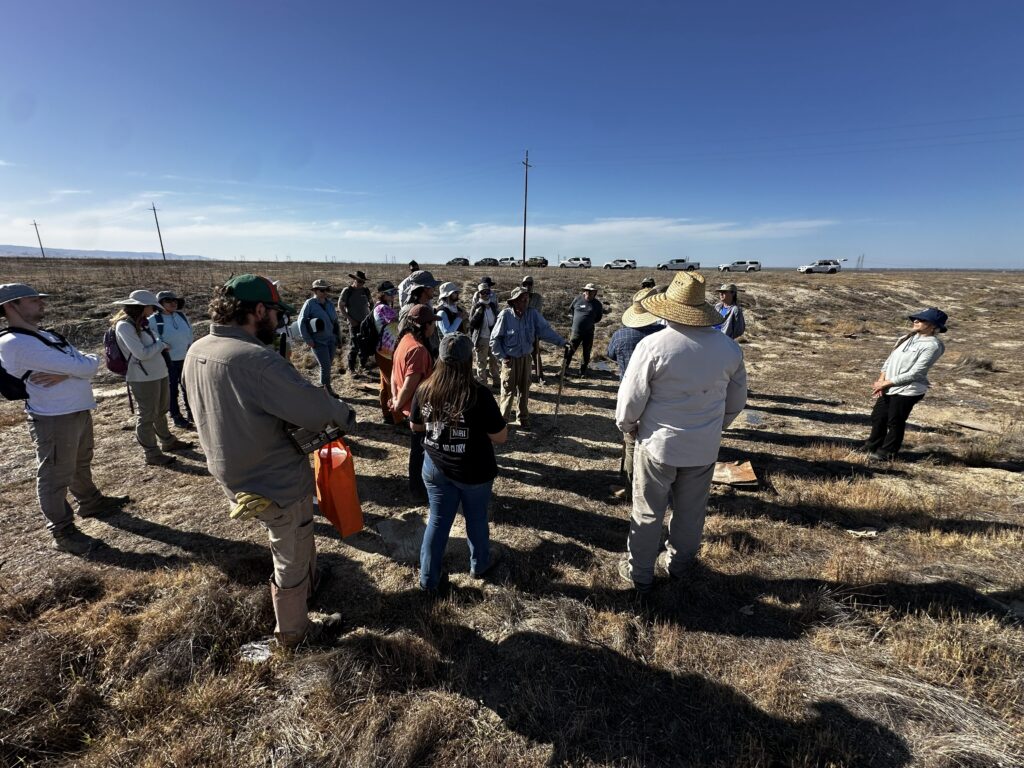
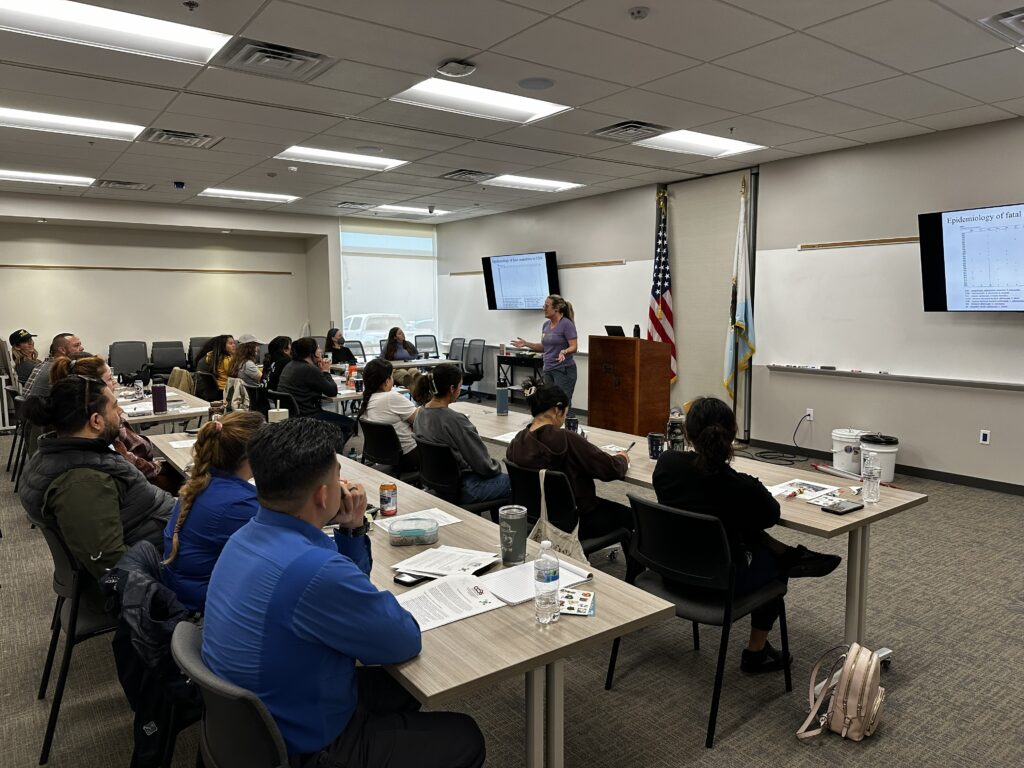
Workshop photos by Ashleigh Pryor
2025
CESA Workshop (November 18-19)
The River Center, 11605 Old Friant Road, Fresno, CA
The San Joaquin Valley Chapter of The Wildlife Society in collaboration with the California Department of Fish and Wildlife presents the 2025 CESA Workshop located in Fresno, California. The workshop consisted of two days of lectures covering the California Endangered Species Act and available methods for Take Authorization including Memoranda of Understanding (MOUs) and Incidental Take Permits (ITPs) focusing on CDFW Region 4. Photo highlights here. All photos by Ashleigh Pryor (used with permission).
———————————————
Skull ID Workshop (April 26th)
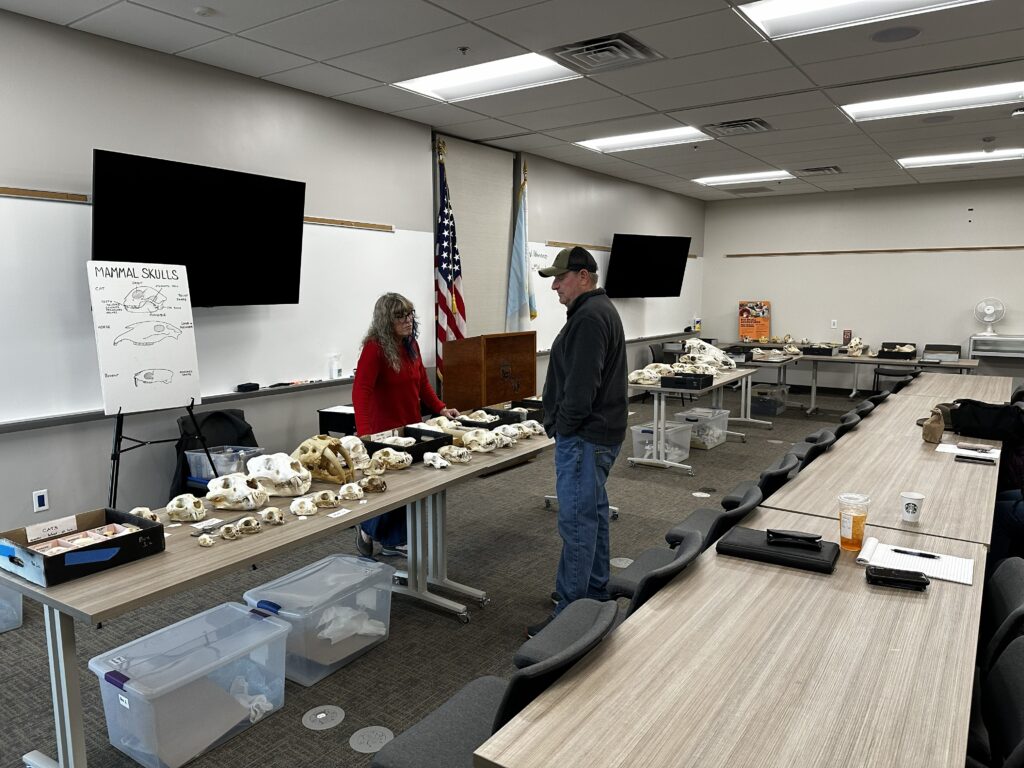
During this half-day classroom session, Kat spoke about skull identification and explained how to identify animals from their skulls. Studying animal skulls is just like being a detective. By examining real animal skulls, students discovered clues about how animals move, what they ate and their overall lifestyle. The workshop’s hands-on approach is integral to scientific inquiry, where observation, information gathering, hypothesis formulation, and conclusion drawing are essential skills. The workshop was a rare opportunity for students to interact with and handle dozens of real animal skulls.
———————————————
Safe Rattlesnake Handling Workshop (March 8th)
The San Joaquin Valley Chapter of The Wildlife Society in collaboration with Dr. Emily Taylor of Central Coast Snake Services hosted a 2025 Safe Rattlesnake Handling Workshop at the Bakersfield BLM Office, in Bakersfield, CA. The workshop consisted of a half-day classroom session covering ecology, conservation, identification, and behavior of rattlesnakes and a half-day hands-on session, where individuals took turns learning how to properly and safely handle a rattlesnake under the guidance of Dr. Emily Taylor.
2024
CESA Workshop (October 15-16)
The San Joaquin Valley Chapter of The Wildlife Society in collaboration with the California Department of Fish and Wildlife presented a 2024 CESA Workshop on October 15 and 16, at the River Center in Fresno, California. The workshop consisted of two days of lectures covering the California Endangered Species Act and available methods for Take Authorization including M.O.U.s and I.T.P.s focusing on CDFW Region 4.
——————————————
Urban San Joaquin Kit Fox Workshop (April 12-14)
California State University Bakersfield, CA
The San Joaquin Valley Chapter hosted a 2024 Urban San Joaquin Kit Fox Workshop in Bakersfield, California. The workshop consisted of lectures and field experiences over three days and covered habitat suitability, kit fox identification, disease, survey protocols, and minimization and avoidance measures that focused on urban populations.
2023
Small Mammal Trapping Workshop (November 2-4)
The workshop was a huge success! We had one day of lectures covering all of the special status small mammals that occur in the San Joaquin Valley and the adjacent foothills. These include the Giant kangaroo rat, the San Joaquin kangaroo rat group, the San Joaquin antelope squirrel, the Buena Vista Lake shrew, and the San Joaquin pocket mouse. We also covered non-listed bycatch small mammals and federal / state permits. After the species and regulatory talks we traveled to the Lokern Reserve and set traps for nighttime kangaroo rat trapping. Each student was able to handle giant kangaroo rat and short-nosed kangaroo rat under the guidance of a permitted handler. The next day we ventured back into the field and set traps to catch San Joaquin antelope squirrels and each student was able to experience handling the squirrel under the guidance of a permitted handler. We repeated the field class again the following night and day.
2018
Blunt-Nosed Leopard Lizard Workshop (May 18-19)
The Blunt-nosed leopard lizard workshop was a huge success. We had lectures by species experts and nearly 40 students and 8 instructors, and California Department of Fish and Wildlife staff, conducted surveys on the Semitropic Ecological Reserve. The Reserve is approximately 14,900 acres. Vegetative communities are primarily non-native grassland shadscale scrub and alkali sink scrub. Each team detected anywhere from 1 to 4 blunt-nosed leopard lizards, with handling demonstrations by Department staff. We thank everyone who attended, and hope everyone had a great time.
2017
Tracking Workshop (November 10-11)
Jim Lowery and Mary Brooks of Earth Skills, along with the San Joaquin Valley Chapter of The Wildlife Society, hosted a tracking workshop at the River Ridge Ranch in Springville.
2016
Blunt-Nosed Leopard Lizard Workshop (May 6th and June 3rd)
The 2016 Blunt-nosed Leopard Lizard (BNLL) Workshop was a huge success. The classroom portion was completed on Friday, May 6th, however, the field portion was postponed to June 3, 2016, due to poor weather. On June 3rd, 4 instructors and 20+ students arrived at the Semi-Tropic Ridge Preserve in Kern County (near Lost Hills, CA) and set out to survey for BNLL (following the BNLL survey protocol established by the California Department of Fish and Wildlife). Instructors showed students how to take soil and air temperatures, how to scan for lizards and other reptiles, while at the same time not stepping on rattlesnakes. Surveys were conducted between 08:30 and 12:00. Each group detected anywhere from 1 to 6 BNLL, as well as other lizard species, including Tiger Whiptails and Common Side-blotched Lizards.
2015
Mammal Track & Sign Workshop (November 14-15)
2012
San Joaquin kit fox workshop (May 21-23)
Sensitive Small Mammal Species of the San Joaquin Valley Workshop (October 5-6)
Both workshops were major successes and provided a great opportunity for local biologists to learn about our native species. We thank the coordinators and instructors for a job well done!